Replacing a Failing Wood Retaining Wall: Options & Costs
Old wood retaining wall starting to fail? Learn your best replacement options, what really affects cost, and key things to know before upgrading.
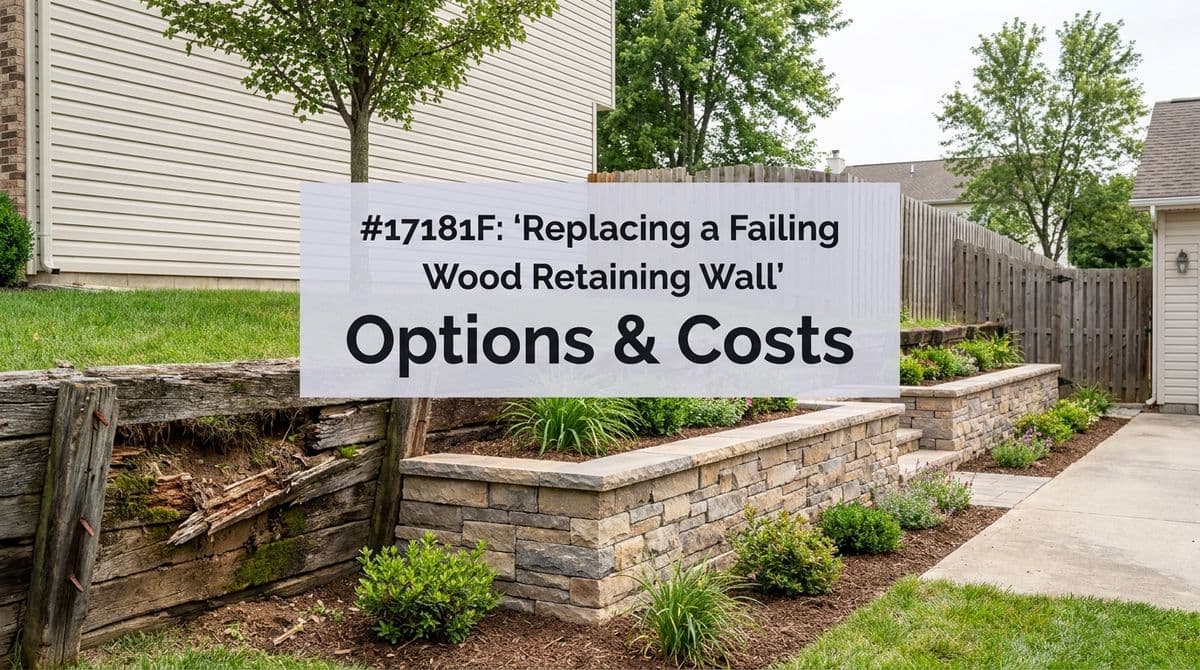
When a Wood Retaining Wall Starts to Fail
We recently got a call from a homeowner — let’s call her Susan — who sounded a lot like many of the folks we hear from in our area. She had a small retaining wall out by the driveway, built years ago out of old wood logs. Now the boards were bowing, some pieces were rotting, and the whole thing was starting to lean.
Susan told us, “It’s just coming apart, and we’re not in a rush, but we know it needs to be replaced before it gets worse.” We were already out doing estimates on a rainy day, so we scheduled a time to stop by, walk her property, and talk through her options.
If you’re looking at a tired, failing wood retaining wall and wondering what to do next, Susan’s situation is probably very familiar. Below, we’ll walk through what we usually explain during a visit like that: your replacement options, ballpark costs, and what we want every homeowner to know before upgrading.
First Step: Is Replacement Really Necessary?
When we arrive on site, we always start with one basic question: Can this wall be safely repaired, or does it need full replacement?
With older timber or log-style walls, replacement is usually the right move when you see:
- Rotting or crumbling wood near the base or where the wood meets the soil
- Noticeable leaning or bulging in the middle of the wall
- Gaps between boards or logs where soil is washing through
- Mushrooms, mold, or insect damage along the wall
We explained to Susan that once a wood wall starts to lean and rot, patching it is usually just a temporary bandage. The soil pressure doesn’t go away, and the wall continues to move. At that point, we recommend investing in a proper replacement that will last.
Best Replacement Options for a Wood Retaining Wall
When a homeowner like Susan asks, “What should we replace it with?” we usually narrow it down to three main choices. Each comes with its own balance of cost, looks, and lifespan.
1. Modern Wood or Timber Walls
Some homeowners simply want a cleaner, stronger version of what they already have.
Pros:
- Generally the lowest upfront cost
- Natural, warm look that blends into the landscape
- Faster to install than many masonry options
Cons:
- Even treated wood will eventually rot, especially in damp areas
- Typical life expectancy is about 10–20 years if built and drained properly
- Can attract insects or become a home for termites if not monitored
We told Susan that if budget was the top priority and she liked the wood look, a properly engineered wood wall could still be a good option — as long as she understood it wouldn’t last as long as block or stone.
2. Segmental Concrete Block Walls
For most residential projects, we find that segmental concrete block systems (those interlocking retaining wall blocks you often see) hit the sweet spot.
Pros:
- Much longer lifespan than wood when installed correctly
- Clean, finished look with multiple colors and textures
- Designed to work with proper drainage and reinforcement
Cons:
- Higher upfront cost than most wood walls
- Requires a solid base and more careful installation
This is what we often recommend when a homeowner wants a long-term solution without jumping all the way to full masonry or poured concrete.
3. Natural Stone or Poured Concrete Walls
For some properties, especially where there’s a lot of elevation change or a visible front yard feature, we may suggest stone or poured concrete.
Pros:
- Extremely durable and long-lasting
- Can be very attractive and add to curb appeal
- Handles higher loads and taller walls when engineered properly
Cons:
- Usually the most expensive option
- Longer installation time
We typically reserve these options for more complex sites or when a homeowner wants a true “forever wall.”
What Drives the Cost of a Retaining Wall Replacement?
The question Susan really wanted answered was, “What is this going to cost us?” While we always need a site visit to give a solid quote, we walked her through the main cost drivers so the numbers make sense.
1. Length and height of the wall
More wall means more material, excavation, and labor. Even adding six inches of height can change the engineering and cost.
2. Access to the site
We look at things like: Can we get equipment close to the wall? Are there fences, tight gates, or steep slopes? Poor access can add time and labor.
3. Type of material
Wood is usually the least expensive upfront, followed by concrete block, then natural stone or poured concrete at the higher end.
4. Drainage and base prep
We explain to every homeowner that drainage is not optional. A proper wall needs a compacted base, drainage pipe, and gravel backfill. Skipping these is how you end up calling us again in a few years.
What Homeowners Should Know Before Upgrading
On our walkthrough with Susan, we hit the same key points we share with anyone replacing a failing wood wall:
- Permits and codes: Depending on height and location, your wall may need permits or engineering. We help you understand what’s required in your area.
- Property lines: Before we start, we want to be sure the wall is on your property. A survey or existing plot plan is extremely helpful.
- Utility lines: We always call in utility locates so we know where gas, water, power, and cable lines are before digging.
- Future plans: If you’re thinking of expanding a driveway, adding a patio, or changing the yard layout, we design the new wall with those plans in mind.
We also encourage homeowners to think in terms of total lifespan value, not just the cheapest number on the estimate page. A slightly higher investment now in better materials and drainage can mean decades of worry-free performance instead of another replacement down the road.
Ready to Replace Your Old Wood Retaining Wall?
If your retaining wall looks like Susan’s old log wall — leaning, rotting, or just generally tired — it’s a good time to start planning a replacement before it becomes a safety or erosion problem.
We’re always happy to walk the site with you, talk through material options, explain costs in plain language, and design a wall that fits both your budget and your long-term plans for the property. When you’re ready, reach out and we’ll take a look at your wall and help you decide the best way to upgrade it for the next 20+ years.